A dress code is a formaly imposed standard of dress within a school or work setting (according to Merrimam Webster dictionary). These dress codes need to exist because many people lack style, fashion sense, an understanding of what is work-place appropriate or they truly don’t care about fashion. Yes I said it! So now allow me to explain.
Working in various professions, I have experienced different dress codes and yet I am still shocked at how many individuals still manage to come to work dressed in a very unprofessional manner. Now, I understand that many people want to express personal style and comfort at work, which can be done, without compromising personal style and professionalism. I’ve experencied three types of dress codes and how to implement your personal style, while being professional and a la mode. The detailed dress code always calls for your look to be in season with the current collection of “it” pieces, colours or style. Being a fashionista, I’m in favor of this dress code because it captures the goal of the business with accuracy and professionalism. Business casual, which is meant for a style of dress somewhere between Professional and Casual. Yet many people lean toward the casual. Lastly, the colour code, where employees must dress in particular colours.
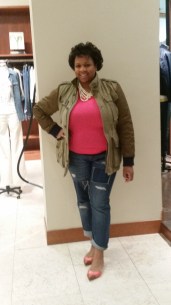
The Detailed dresscode: My career as a personal stylist is all about the details and creating looks that flow within the current trends of fashion while maintaining a look of professionalism. One of the “must wear” items in this particular dress code is a blazer must be worn with jeans. Now if your recall from a previous posts, I catogorize the blazer as a classic and essential element of any wardrobe. I loved that this is required because it instantly elevates denim and employees always look professional. Now, if denim is not an option(in your place of business), refer to The third piece rule. Now if you chose to wear a skirt or a knit pant, paird with a button-down blouse, you must wear a third piece, which could include a cardigan, sweater or a statement piece such as a bold scarf or piece of jewelery. The third piece pulls the look together, focuses the eye and looks professional. Not to mention that it is easy to transition the look from day to night. Detailed dress codes take time to plan and mastered, but once you’ve established you detailed formula of detailed dress code, you will always look fashionable and professional.
 Business-casual (not just casual) Now, Business casual is the most difficult dress code to define and has been left up to the business and sometimes the individual to interpreted the definition. So, I am here to help clear up the confusion. Now Gentlemen, your business casual look should comprise of khakis, crisp button down and/or sweater. Tie is optional. I will address foot wear in a minute. Ladies….Ladies, we have so many
  dress code options that vary according to the event. Business casual should follow the following: proper fitting pant (skirt at the knee)+ blouse (substitute button down, if need to) + blazer or cadrigan+ statement piece= business casual look. Leggings do not fit into this equation, and truthfully unless you work in personal fitness or in the gym, Leggings ARE NOT acceptable in the work place.
Colour Code. I’ve recently changed my full-time dress code from a business-casual to a

colour based dress code. Now I’m loving the position, however this colour based dress code has been a challenge on many levels. One you guys know, that I am obsessed with colour. Second, many people believe that if they’re dressed in the appropriate colour that they are dressed professionally. Wrong! I’ve seen too many fashion faux-pauxs. Let me reiterate that Leggings (even if they are colour appropriate) of any kind ARE NOT acceptable. They do not provide any support, they are too sheer (I should not see flesh or bright panties of any kind). They are extremely unprofessional not matter what they are styled with. Now, I’m not anti-leggings. I am anti-leggings in the work place. I also find that individual feel as if they don’t need to try as hard to look professional because they’ve meet the colour requirement. Now, I’m not a fan of this dress code but I understand why it is chosen. Having all employees dressed in the same colours, creates a sense of unity, intended to limit distractions and promote employee productivity.
Foot Wear: Flip- Flops and sneakers are not work appropriate. They simply look unprofessional. Now there are some exceptions to the rule you can wear a fashion sneaker with jeans and a blazer. Ladies, I know we love our heels but you need to have a cute flat to transition into, please do not wear a slipper at the office during business hours. It just looks lazy and unprofessional. After business hours, that is a different story.
Professional style is important because we as a visual society make many decisions based on how someone is dressed. It can determine if you get an interview, if a company or individual wants to do business. Not to mention, you never know who you will encounter throughout your daily travels. There have been a few times where I’ve had on the spot interviews and gotten the job. The most important thing to remember in a professional dress code is garments should have structure and clean lines when it comes to your professional wardrobe. Individualize your style with colour, prints, scarves or statement pieces of jewelry. Style is important because it is the first thing anyone sees prior to any type of engagement.
 Style by Syraluna